Showing posts with label Sentineli. Show all posts

Tuesday, February 7, 2023

Wild Free and Happy sample 84: Wild Free Isolation

[Note: The following is some new and updated material from my rough draft of Wild, Free, & Happy.  It is primarily expansion or revision of subjects related to samples 52, 53, and 54.  The other samples of this rough draft can be accessed HERE.  If you prefer audiobooks, Michael Dowd has been reading and recording my book HERE.]


 We live in interesting times.  Bunnies aren’t acidifying the oceans.  Salmon aren’t blindsiding the climate.  Geese aren’t nuking rainforests.  Even our closest relatives, the chimps and bonobos, remain absolute champions at sustainable living.  The human mob, on the other hand, has been making quite a mess.

During my years of studying and writing, I have enjoyed learning about wild cultures that preserved elegant low impact simplicity.  They hold up a mirror so we can fully appreciate the incoherence of modernity.  Let’s take a quick peek at a few of those cultures. 

Sentineli

The Andaman group of islands is located in the Bay of Bengal, and belongs to India.  North Sentinel Island is inhabited by the Sentineli, a society of negrito pygmies.  Outsiders can sometimes view them from offshore boats, or from helicopters, but the natives want nothing to do with outsiders.  Intruders who get too close are showered with arrows, rocks, and rude comments.  Some have been killed.  India has outlawed all visitors.  Today the Sentineli enjoy a complete separation from the modern world. 

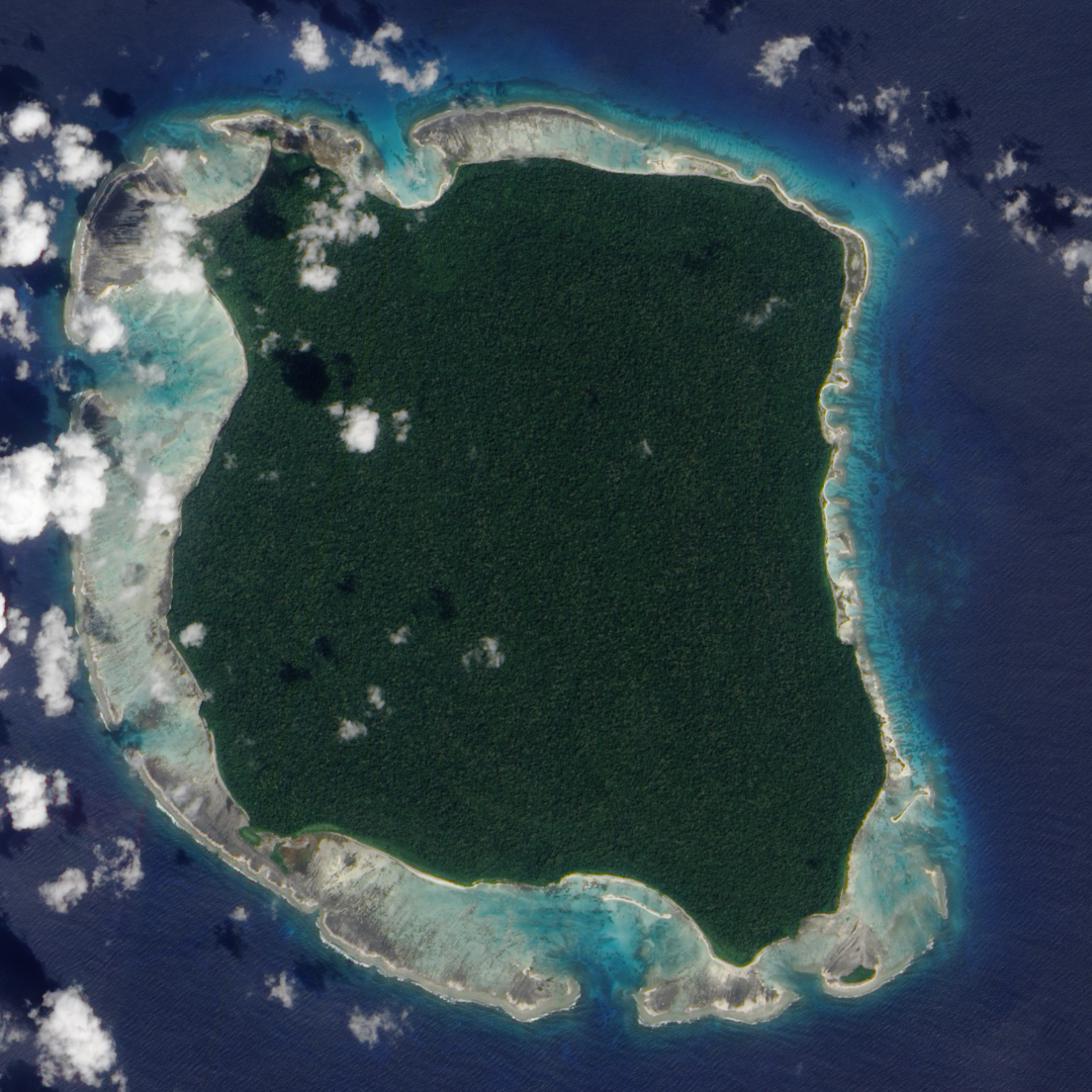
Their island is 14,700 acres (5,949 ha), a bit smaller than Manhattan.  The interior is forest, surrounded by sandy beaches, surrounded by reefs.  Treacherous currents make landing on the island impossible for ten months of the year, and extremely dangerous for the other two.  The island has nothing that is attractive to greedy parasites from elsewhere.  For these reasons, the Sentineli remain wild and free in the twenty-first century.

Flyovers have noted the existence of several villages with clusters of small huts.  No evidence of agriculture has been observed.  There may be 50 Sentineli, or 500, nobody knows.  They survive by foraging, fishing, and gathering shellfish.  They may also hunt for turtles, birds, and invertebrates.  Their small canoes are used in the lagoons, but not for open-sea travel.  They fish with spears and nets.

Long ago, two expeditions were able to land on North Sentinel.  They brought along folks from a nearby island to serve as translators.  In the brief and hostile meetings, the Sentineli spoke a language that the translators did not understand.  Obviously, they have been living in isolation for a long time.  They may be descendants of the folks who first settled in the Andaman Islands 60,000 years ago.

Imagine what it would be like to live in a society that was not at war with the planet and the future — a genuinely sustainable way of life, a tropical culture with a year round supply of food, where your wardrobe consisted of a g-string, headband, and a couple leaves.  Imagine a life without money, clocks, calendars, automobiles, airplanes, sirens, internet, locks, fences, bosses, salesman, presidents, police, classrooms, guns, dogs, nuclear weapons, taxes, racism, billionaires, and religions.  Imagine a paradise where the diseases of civilization were unknown.

Contemplate the enormous load of information stored in your brain, accumulated during a lifetime of existing in a highly complex society, and your constant struggle to keep pace with competitors in the endless quest for status, wealth, and power.  Now, imagine being blissfully unaware of absolutely everything happening in the outside world — and the entire outside world knowing almost nothing about your society.  Imagine having a healthy, simple, sane life.

Imagine living on an island where there were no strangers, where the soundtrack was waves, birds, breezes, and the voices of your friends and family.  We weren’t meant to live like consumers.  There are better paths.

New Guinea Highlands

New Guinea is a land base much larger than Oregon and California combined.  Around 1930, white folks from elsewhere began wandering into the highlands, in search of mineral treasure.  At that time, the highlands were home to a million uncivilized folks unknown to the outer world.

Bob Connolly and Robin Anderson wrote that native groups spoke maybe 800 languages, of which several hundred were unique, having absolutely nothing in common with any other language in the world.  Communication between tribes was limited or impossible.  It wasn’t easy for innovative ideas to spread from group to group.  This helped tribes preserve traditional cultures. 

Long distance travel (10+ miles) was also difficult or impossible because of the rugged mountain landscape, warlike enemies, and deadly fevers.  There were no roads, wheels, or beasts of burden.  One group might be completely unaware that other groups resided just a few miles away. 

So, many groups may have existed in complete isolation, living as they had always lived, in their ancient time proven manner.  Nobody in the highlands knew that they lived on an island, or that the Pacific Ocean existed.  There may still be uncontacted groups that remain wild, free, and unknown to the outer world. 

As mentioned earlier, when interaction between groups creates regional webs, and more and more webs share more and more ideas with a widening circle of other webs, shit happens.  Over the passage of centuries, accumulations of cleverness can trigger explosive snowballing chain reactions, creating situations like the world outside your window.  How clever was that?

Pirahã

I was especially fascinated to learn about the Pirahã (pee-da-ha) people of the Amazon rainforest.  They are hunter-gatherers who live in a few jungle villages along the Maici River in northwestern Brazil.  Estimates of their population range up to 800.  They hunt, fish, and forage.  Fish provide about 70 percent of their diet. 

Over the years, I’ve read about many wild cultures.  The Pirahã are among the simplest and lowest impact of all.  We know a lot about their culture, largely because of Daniel Everett, a missionary sent to save them.  Over time, it became painfully clear to him that they didn’t need to be saved.  He was the one who was lost.  He concluded, “I would go so far as to suggest that the Pirahãs are happier, fitter, and better adjusted to their environment than any Christian or other religious person I have ever known.”

The Pirahã knew the usefulness and location of all important plants in their area.  They understood the behavior of local animals, and how to take them, or avoid them.  They could walk into the jungle naked, with no tools or weapons, and walk out three days later with baskets of fruit, nuts, and small game.  By the age of nine, all of them were capable of surviving in the jungle on their own, feeding themselves and making shelter.

The Pirahã were able to effectively communicate via speaking, singing, humming, and whistling.  When hunting, whistles were less likely to spook monkeys and other game.  Whistled words allowed conversations between folks who were not close together.  Their language has nothing in common with any other language in the world.

The Pirahã had no leaders or social hierarchy, all were equal.  It was taboo to tell someone to do something.  They were amazingly content, tolerant, and patient.  Children were never spanked or given orders.  They were free to play with sharp knives.  Adults spoke to them as equals, no baby talk.

In the tribe, memories of ancestors or historic events were not preserved, they evaporated.  Their realm of reality was limited to stuff that they could personally see or hear, or things seen or heard by their living parents, grandparents, friends, and kinfolk.  History was strictly limited to living memory.  If a missionary had not actually met Jesus, then jabber about Jesus was meaningless.

The Pirahã people were remarkably easygoing and infectiously happy.  They wore bright smiles, and laughed about everything.  Folks didn’t worry about what happened yesterday, or what might happen tomorrow.  They had no word for worry.  They lived entirely in the here and now.  They had no cultural folklore, legends, fables, or worship.  He wonders if they might be the only group in the world that has no numbers, and no creation myth.

Everett wrote, “Committed to an existence in which only observable experience is real, the Pirahã do not think, or speak, in abstractions.”  (“Abstract” is the opposite of concrete.  Abstractions only exist as ideas or thoughts.)  They have no concept of heaven, hell, sin, god, creation, apocalypse, devils, angels, guilt, punishment, salvation, damnation, sustainable, rich, poor, overshoot, democracy, capitalism, and on and on.  

Modern folks spend their entire lives with their heads constantly buzzing with swarms of abstractions.  The Pirahã spend every day of their lives being highly attuned to the incredible living paradise that they are so lucky to inhabit.  They enjoy living in a stable, low impact, time-proven culture where everyone shares the same belief system. 

Everett was amazed by them.  “This is a culture that’s invisible to the naked eye, but that is incredibly powerful, the most powerful culture of the Amazon.  Nobody has resisted change like this in the history of the Amazon, and maybe of the world.”

They were lucky to have enjoyed centuries of isolation in a vast tropical rainforest.  They had very little contact with clever outsiders who had bad habits, odd tools, dark impulses, and heads slithering with brainworms.  Unfortunately, the outer world has found them, and wants to “help” them enjoy the wonders of modern living.

Every morning, I listen to news reports describing a world that is out of its mind.  I think about the Pirahã, who are also getting up, smiling and laughing, down by the river, welcoming the beginning of a new day.  Same species, same morning, same planet.  They have not forgotten who they are, or how to live.

If you are curious about the Pirahã, and have a couple hours to invest, I recommend that you listen to the 52 minute The Humanist Hour #183 podcast (2015), and watch the 2012 documentary, The Grammar of Happiness.   


Saturday, December 31, 2016

Sentineli


I have a story to tell, a story about freedom, and a wild society we call the Sentineli.  In an age of big craziness, they inspire pleasant daydreams.  It’s almost impossible for me to imagine how perfectly free they are, or to comprehend just how far modern society has drifted from the freedom enjoyed by my wild ancestors.

The Andaman archipelago lies in the Bay of Bengal.  These tropical islands are part of India.  North Sentinel Island is inhabited by the Sentineli, a society of negrito pygmies who have short stature, dark skin tone, and peppercorn hair.  Outsiders can sometimes view them from offshore boats, or from helicopters, but the Sentineli want nothing to do with outsiders.  Intruders who get too close are showered with arrows, rocks, and rude comments. 

North Sentinel Island is 14,700 acres (5,949 ha), a bit smaller than Manhattan.  The interior is forest, surrounded by sandy beaches, surrounded by reefs.  [Aerial photo]  Treacherous currents make landing on the island impossible for ten months of the year, and extremely dangerous for the other two. The island has neither valuable timber nor minerals.  For these reasons, the Sentineli are still free people in the twenty-first century.  Unlike the societies on nearby islands that have been ravaged by the diseases of civilization, the Sentineli are “clearly extremely alert, healthy, and thriving.”

Flyovers have noted the existence of several villages with clusters of small huts.  No evidence of agriculture has been observed.  There may be 50 Sentineli, or 500, nobody knows.  They survive by foraging, fishing, and gathering shellfish.  They may also hunt for turtles, birds, and yummy invertebrates.  Their small canoes are used in the lagoons, but not for open-sea travel.  They fish with spears and nets.

Long ago, two expeditions were able to land on North Sentinel.  They brought along folks from a nearby island to serve as translators.  In the brief and hostile meetings, the Sentineli spoke a language that the translators did not understand.  Obviously, they have been living in isolation for a long time.  They may very well be descendants of the folks who first settled in the Andaman Islands 60,000 years ago.  North Sentinel Island is a time capsule, the Sentineli still live like humans during the warm interglacial before the last ice age.

In 1974, National Geographic sent an expedition to film the Sentineli.  The director was promptly hit in the leg with an arrow, and immediately lost interest in the project.  In 2004, when a ferocious tsunami rocked the lives of tens of millions in the region, the Sentineli made it to high ground and survived.  Some believe that they have a sixth sense, because of their elevated sensitivity to the winds and waves.  In 2006, rogue fishermen got too close, and two were killed.  A helicopter sent to fetch their bodies was driven away.

Between 1967 and 1996, a number of contact expeditions were attempted, for the purpose of anthropological research.  Anthropologists are highly educated scientists.  They were certainly aware that successfully making contact would have exposed the natives to deadly diseases for which they had no immunity.  Like modern missionaries in the Amazon, they didn’t care if making contact would result in numerous deaths.  On the bright side, anthropologists actually had sufficient intelligence to understand the strong message being sent via volleys of arrows and rocks.

In 1996, the Indian government banned further contact expeditions, for any reason, in order to protect the natives from disease.  The natives were clearly not begging to join civilization and enjoy the pleasures of shopping, taxpaying, cell phone addiction, and wage slavery.  So, the Sentineli enjoy complete separation from the modern world.  In an amazing demonstration of respect, wise leaders decided to leave these people alone, and allow them to live in wildness and freedom (unlike the other 1.3 billion Indians).

Imagine what it would be like to live in a society that was not at war with the planet and the future — a genuinely sustainable way of life, a tropical culture with a year round supply of food, where your wardrobe consisted of a g-string, headband, and a couple leaves.  Imagine a life without money, clocks, calendars, automobiles, airplanes, sirens, internet, locks, fences, bosses, salesman, presidents, police, classrooms, guns, dogs, nuclear weapons, taxes, racism, billionaires, and intolerant proselytizing religions.  Imagine a paradise where the diseases of civilization were unknown.

Contemplate the enormous load of information stored in your brain, accumulated during a lifetime of existing in a highly complex society, and your constant struggle to keep pace with competitors in the endless race for status, wealth, and power.  Imagine being blissfully unaware of absolutely everything happening in the outside world — and the entire outside world knowing almost nothing about your society.  Imagine having a healthy, simple, sane life — living in a manner very much like your ancestors did 15,000 years ago.

Imagine living on an island where there were no strangers, where the soundtrack was waves, birds, breezes, and the voices of your friends and family.  We weren’t meant to live like consumers.  There are better paths.

Here are some links:


Monday, March 25, 2013

God Save Me From A Normal Life — Part Three


The vision that guides our society is peculiar.  Step 1 is to absorb as much education as you can endure and afford.  Step 2 is to plug into the economy, aggressively pursue every opportunity for advancement, and make as much money as you can, by any means necessary.  Step 3 is to spend that money in a manner that continuously increases your display of personal status, as defined by the current trends of consumer society. 

Obviously, this culture is disconnected from our ancestral roots, and from the family of life.  Countless millions devote their entire lives to acquiring and discarding unnecessary stuff.  In the magazine room at the library, I observe patrons devoting intense attention to understanding the latest trends in automobiles, electronics, fashion, cosmetics, homes, pets, and so on.  They long to experience inner peace and happiness in their lives, and they believe that shopping is the sacred path.  But, no matter how skillfully they shop, or how much they spend, it never works, except for fleeting post-purchase consumer orgasms.  Trainloads of Prozac numb the pain.

Nature-based cultures understand and respect power.  It’s everywhere, in everything, including all of us.  Power comes in many forms, and it is the greatest gift of all.  Some folks are skilled at tracking, hunting, or midwifery.  Others are healers, warriors, or storytellers.  There are weavers, herbalists, or shamans.  Power speaks to those who listen.  Modern folks often leave their power in the box, unopened, because they’ve never discovered their vision.  They are lost.

A minority of modern people do manage to connect with their power, and use it.  They are not swept away by the strong currents of consumer society, because they can see right through the silly nonsense, and they have the power to deflect it.  They do not indulge in false hope and irrational optimism.  They remain present in reality.  I don’t understand why they are different, and I have no name for them, but they certainly exist, and they live outside the fence of the fantasy world, usually in the shadows, distrusted by the mainstream. 

They tend to be intelligent, imaginative, and horrified by the madness of modern society.  Their right brains are bulging and strong, from regular creative exercise.  They are often writers, artists, musicians, filmmakers, playwrights, poets, storytellers, dreamers, or rebels — people whose spirits have not been severed from the ancestral realm of uncontrollable wildness and freedom.  They have power.  According to The Dark Mountain Manifesto, “Words and images can change minds, hearts, even the course of history.  Their makers shape the stories people carry through their lives, unearth old ones and breathe them back to life, add new twists, point to unexpected endings.” 

If they had grown up in a nature-based culture, some of them might have been known as shamans.  All wild cultures had shamans.  Everywhere around the world, descriptions of their methods are remarkably similar.  Adults in a tribe can readily recognize the boys and girls destined to become shamans, because their power is easy to see.  They sometimes have so much power that it’s hard for them to function in society.  Older shamans take them under their wing, and teach them how to carry their power, and use it well.

Ordinary children have no memories of other times, lives, or realities, but young shamans do.  They tend to be introverted, and closely allied to nature.  They may have powerful dreams or hallucinations.  They can communicate with the spirit world, and see things that the others cannot.  Sometimes they play important roles as messengers, bringing back wise instructions from ancestral spirits, when the tribe is confronted with challenges.  They have a strong spiritual connection to life.

For the sacred task of envisioning a sustainable future, people with shaman-like powers could help us remember who we are, and where we came from.  Whatever we call them, they must be people who have a passionate relationship with the natural world, who excel at clear thinking, people who can effortlessly think outside-the-box.  This sort of crowd has power.  They can break spells.

Donella Meadows devoted a lot of thought to the notion of envisioning a sustainable future.  Our society is enacting a vision of perpetual growth, and this drove her crazy, because it’s so stupid.  This stupid vision thrives because alternative visions have yet to gain momentum.  Most folks have no interest in greener visions, because they are perceived to require sacrifice, a life of less.  Less what?  Less stupidity?  Less waste?  Less anxiety and depression? 

I recently saw the movie Cave of Forgotten Dreams, about the ancient paintings at Chauvet Cave in France, discovered in 1994.  Many of the paintings were done about 32,000 years ago, and they depict profound reverence for life.  In those days, France was a healthy paradise filled with wild aurochs, horses, rhinoceros, bears, lions, bison, and many others — a world that was spectacularly alive and well.  The paintings may have been made over a period of 5,000 years. 

Can you imagine a low-impact way of life that lasted 5,000 years?  Can you imagine living in a society filled with awe, amazement, and overwhelming love for the natural world?  Can you imagine living in a world that wasn’t on a high-speed path to self-destruction?  Was this era of abundant freedom, wildness, and vitality truly “less” than our modern suburbia?  Wouldn’t it be precious to wake up in a sane and healthy world?

Our wild ancestors always resisted the aggressive intrusion of outsiders.  The Sentineli still do.  They inhabit North Sentinel Island, one of the Andaman archipelago of islands, in the Bay of Bengal, off the coast of India.  These people are a Stone Age society of Negrito pygmies who survive by hunting, foraging, and especially fishing.  No signs of agriculture have been observed.  They have a long tradition of welcoming visitors with a shower of arrows and insults, and they are skilled marksmen.

Amazingly, the Indian government protects the Sentineli, and allows them to live in wild freedom.  They remain free because the island isn't that big, doesn't have much valuable timber, and mineral treasures are unlikely.  The island is surrounded by treacherous reefs and treacherous seas — safely getting there by boat is nearly impossible.  Once a year there is one location that becomes theoretically accessible to those who wish to take their life in their hands and fight the powerful currents. 

The Sentineli enjoy a good life in a healthy, stable, and sustainable culture.  They need nothing that they don’t have.  They want to be left alone to live in peace.  Imagine what a terrible “sacrifice” it would be to live a simple life on an island paradise, in balance with nature, in a world with no strangers.

To be continued.